

Responsible Gambling
- Updated October 22, 2026
- Wine Time Editorial
Responsible gambling starts before the first bet: decide how much money and time you can afford to spend, understand the game, and know when to stop. A deposit limit can restrict how much you add to an account, but it cannot make a losing bet safe. If you are borrowing to gamble, chasing losses, or hiding activity from people you trust, stronger steps - such as self-exclusion and professional support - may be more appropriate than another budget.
There is no risk-free form of gambling. Safe play, safer gambling, and responsible gaming describe ways to reduce gambling-related harm , not methods for guaranteeing a win or preventing every loss.
What Does Responsible Gambling Mean?
Responsible gambling means making informed decisions about whether, when, and how to gamble while recognizing that the outcome is uncertain and losses are possible. The approach combines personal boundaries with player protection measures offered by licensed operators and required by state gaming regulators.
The same basic risks arise with online casinos, slots, sports betting, lottery tickets, and, where applicable, daily fantasy sports.
The American Gaming Association's Play Smart from the Start program emphasizes three useful habits: begin in the right state of mind, know the game, and act intentionally. The Responsible Gambling Council similarly recommends planning spending and time before playing.
Decide Whether Gambling Is Appropriate Right Now
Setting limits only helps when a person is able and willing to follow them. Before gambling, consider these questions:
- Are your basic expenses covered? Rent, groceries, utilities, loan payments, and emergency savings come first. Money reserved for them is not disposable income.
- Would losing the entire planned amount create financial stress? If yes, do not stake it.
- Are you trying to recover previous losses or solve a money problem? Stop rather than place another bet.
- Are you upset, anxious, exhausted, intoxicated, or acting impulsively? Delay gambling and choose another activity.
- Can you comfortably walk away after a loss or a win? If stopping feels difficult, additional controls or a complete break may be necessary.
Someone with a history of gambling disorder may need to avoid gambling entirely, even if spending limits seem manageable. Responsible play is not a substitute for treatment.
Set a Gambling Budget and Time Limit Before You Play
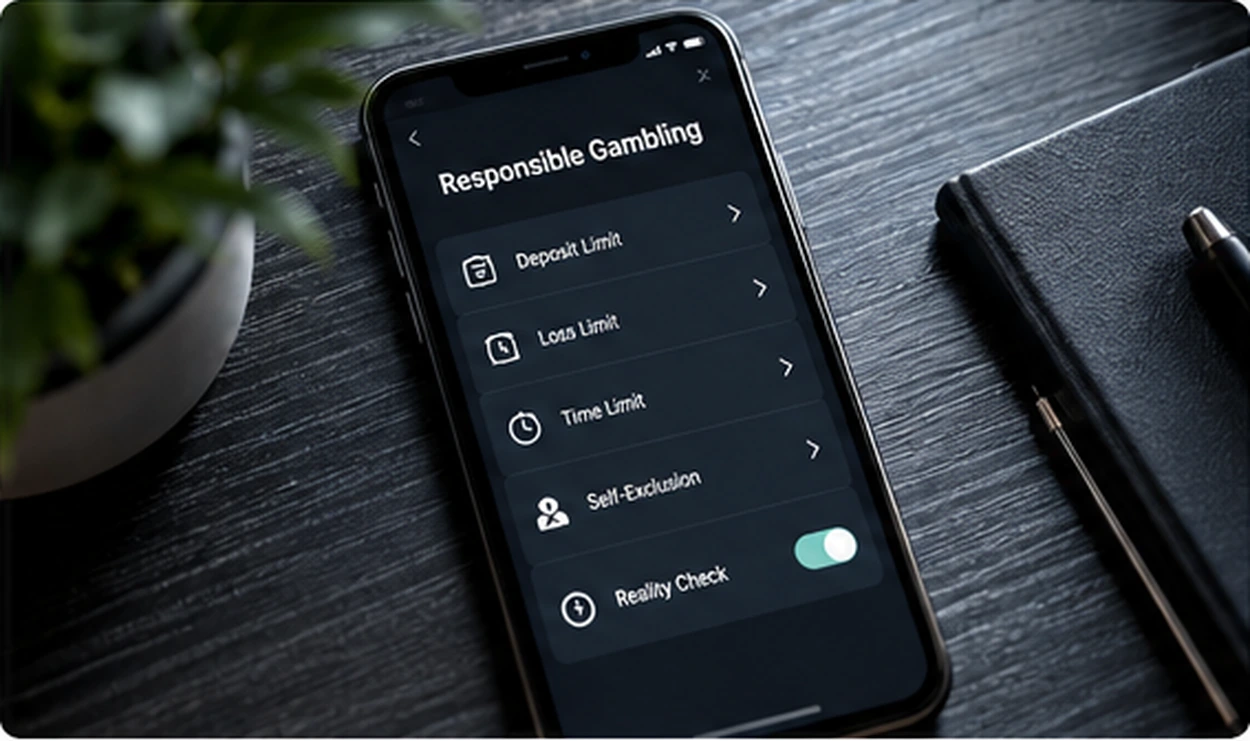
Money set aside for gambling is an entertainment expense, not an investment.
For example, a person who can comfortably afford $30 for an evening could decide to spend no more than $30 and leave after 45 minutes. If the $30 is gone in ten minutes, the session ends. Winning early does not create an obligation to keep betting, and losing early does not justify increasing the budget.
- Set a spending or loss ceiling before opening an app or entering a venue.
- Set a session time limit and an independent phone alarm.
- Avoid borrowing money, cash advances, and using credit cards to finance gambling.
- Check actual transactions and your limit history afterward - not just the balance visible on the screen.
- Keep gambling separate from work, family responsibilities, sleep, and other recreation.
If your limits are repeatedly exceeded, do not simply raise them. That pattern is a reason to pause, reassess your behavior, and consider stronger restrictions.
Which Responsible Gambling Tools Actually Do What?
Different tools control different parts of gambling activity. Names and enforcement rules vary by sportsbook, online casino, and jurisdiction, so confirm the exact setting before relying on it.
Swipe horizontally to see all columns →
| Tool | What it controls | Important limitation |
|---|---|---|
| Deposit limit | How much money can be deposited within a defined period | Does not necessarily cap losses from funds already deposited |
| Loss limit | Losses calculated under an operator's stated rules | Calculation periods and definitions can vary |
| Wager or spending limit | Stake size or amount wagered | Repeated bets may still accumulate costs |
| Session or time limit | Time spent logged in or gambling | May operate as a reminder rather than a forced stop |
| Reality check or check-in reminder | Displays elapsed time or gambling activity | Awareness alone does not restrict access |
| Time-out or cool-off | Temporarily suspends access or gambling features | May affect only one operator or account |
| Self-exclusion | Restricts access for an elected period under program rules | Coverage, duration, and reinstatement rules vary |
| Payment block or gambling blocker | Blocks eligible gambling payments, sites, or apps | May not capture every merchant, device, or platform |
Choose controls according to the problem you actually face.
Where to Find Account Controls
Look for sections labeled Responsible Gaming , Player Protection , Safer Play , or Account Limits . Operators such as DraftKings and BetMGM describe responsible gaming controls in their account resources. Check that a limit was saved, note the reset period, and verify whether it applies to all products under the same brand.
When a Break Is Better Than Another Limit

A voluntary time-out or cool-off period can create breathing room when gambling is beginning to feel compulsive. Account closure is not always equivalent to self-exclusion: simply closing one account may leave other gambling access available.
Self-exclusion generally involves requesting restrictions through an operator or a state-administered program. Depending on the program, the restriction may cover participating online platforms, physical gambling venues, or both. Some state self-exclusion registries have fixed exclusion terms and specific reinstatement procedures. Confirm the scope with your state gambling support resources or gaming regulator before assuming that one application covers every gambling option.
Software such as BetBlocker or Gamban can add a separate layer by blocking gambling sites or apps on compatible devices. Bank gambling transaction blocks may help with payments. None of these protections is comprehensive on its own; combining access restrictions with financial safeguards and support can reduce gaps.
Understand the Odds Before Risking Money
Knowing how a game works prevents some costly misunderstandings, but it does not remove the house edge or guarantee a favorable result. Odds communicate how a sportsbook prices an outcome and what a successful bet may pay. Probability describes the likelihood of an event; the offered odds also reflect the bookmaker's margin.
In many casino games, the house edge is the operator's expected advantage over a large number of wagers. A slot machine's return to player (RTP) is a long-run statistical measure, not the amount any individual will receive back. A random number generator (RNG) determines outcomes in many digital games; a streak of losses does not mean a win is due.
Sports knowledge may help people evaluate information, but it cannot eliminate uncertain results or the risk of impulsive live bets and micro-betting. Lottery draws and slot results cannot reliably be predicted from previous outcomes. No system, lucky ritual, or increase in stake removes the underlying chance of loss.
Recognize Warning Signs of Problem Gambling
Gambling can cause harm long before someone receives a diagnosis of gambling disorder.
- Chasing losses by increasing stakes or returning to gamble soon after losing.
- Borrowing money, accumulating debt, or missing payments to finance bets.
- Hiding transactions, accounts, or the amount of time spent gambling.
- Feeling irritable, restless, stressed, or anxious when unable to gamble.
- Neglecting sleep, work, family responsibilities, or other interests.
- Trying to cut down repeatedly but experiencing a loss of control.
- Gambling while intoxicated or using alcohol or other substances to manage distress.
No single warning sign proves a disorder. But unexplained debt, secrecy, or repeated failed attempts to stop warrant action.
What If You Already Broke Your Limits?
Do not try to win back the amount you lost. Stop the session, remove easy access to deposits, and review bank transactions rather than estimated winnings. If this has happened more than once, use a longer break or self-exclusion and speak with a counselor or helpline advisor. Reframing the next bet as a chance to “get even” is the mechanism behind chasing losses - not a recovery plan.
Find Gambling Help and Support in the United States
Support is appropriate whether you are worried about your own gambling or someone else's. The National Problem Gambling Helpline, operated by the National Council on Problem Gambling (NCPG) , connects people to information and local referrals across the United States.
Call or text 1-800-MY-RESET , or use the NCPG online help portal for chat and state-by-state resources. NCPG describes its national call, text, and chat services as available 24/7. Its legacy number, 1-800-522-4700, also remains active. The helpline offers support and referrals; it is not an emergency-response service.
Other options include professional counseling, specialist gambling disorder treatment, financial counseling for gambling-related debt, and peer support through Gamblers Anonymous. Friends and family members can also seek guidance on setting boundaries and avoiding covering debts in ways that enable continued gambling. In an immediate emergency or if someone is in danger, use emergency services rather than a gambling support line.
How to Check Whether an Online Gambling Site Supports Safe Play
Before providing identification or depositing money, confirm that the operator is legally licensed for the activity in your state. US gambling laws differ by state and sometimes by tribal jurisdiction. The legal gambling age can vary by location and activity; identity verification and geolocation checks may be required for regulated online play.
Check whether the site provides usable account limits, time-outs, self-exclusion instructions, transaction history, clear terms, privacy information, help referrals, and a way to contact customer support. Responsible marketing and advertising standards matter too: promotions should not obscure loss risks or target underage or excluded individuals.
The NCPG's Internet Responsible Gambling Standards address policies, staff training, informed decision-making, player assistance, payments, advertising, self-exclusion, and game features. Its voluntary iCAP accreditation assesses online operator practices against player protection criteria. Accreditation is a useful additional signal, not a guarantee that gambling is harmless or profitable.
Resources from the Pennsylvania Gaming Control Board's responsible-play initiative, the Responsible Gambling Council, and ResponsiblePlay.org can help clarify limits and warning signs. Check current local requirements directly with the relevant state gaming regulator; a tool available in one state may not exist in another.
Responsible Gambling FAQs
Is responsible gambling the same as safe gambling?
The terms are related, but “safe gambling” can imply zero risk. Safer gambling and responsible gambling are more accurate: budgeting, understanding odds, taking breaks, and restricting access can reduce harm without eliminating it.
Do deposit limits stop me from losing more money?
Not necessarily. A deposit limit restricts money added during a period, while a loss limit may apply to the losses calculated by that operator. Previously deposited funds and different operator accounts can change your actual exposure. Read the specific rules and check your bank statement.
Can I cancel self-exclusion whenever I want?
Often not. Eligibility, minimum duration, participating sites, and the process for reinstatement depend on the operator or state program. Find out the conditions before enrolling, but do not delay seeking protection when gambling is causing harm.
Does gambling responsibly improve my chance of winning?
No. Spending controls and breaks change your exposure and behavior, not the mathematical odds, RTP, house edge, or random outcome of a game.
What should I do if a family member has a gambling problem?
Describe the specific behaviors and consequences you have observed, avoid lending money to sustain gambling, protect shared finances where appropriate, and offer to help find confidential counseling or support. Family and friends can contact the National Problem Gambling Helpline for referrals even if the person who gambles is not ready to seek help.
Know When to Stop
If you choose to gamble, decide your limits before opening the app and stop when you reach either one. If gambling has brought debt, secrecy, distress, or repeated difficulty stopping, take a break, block access, and contact a support service.