
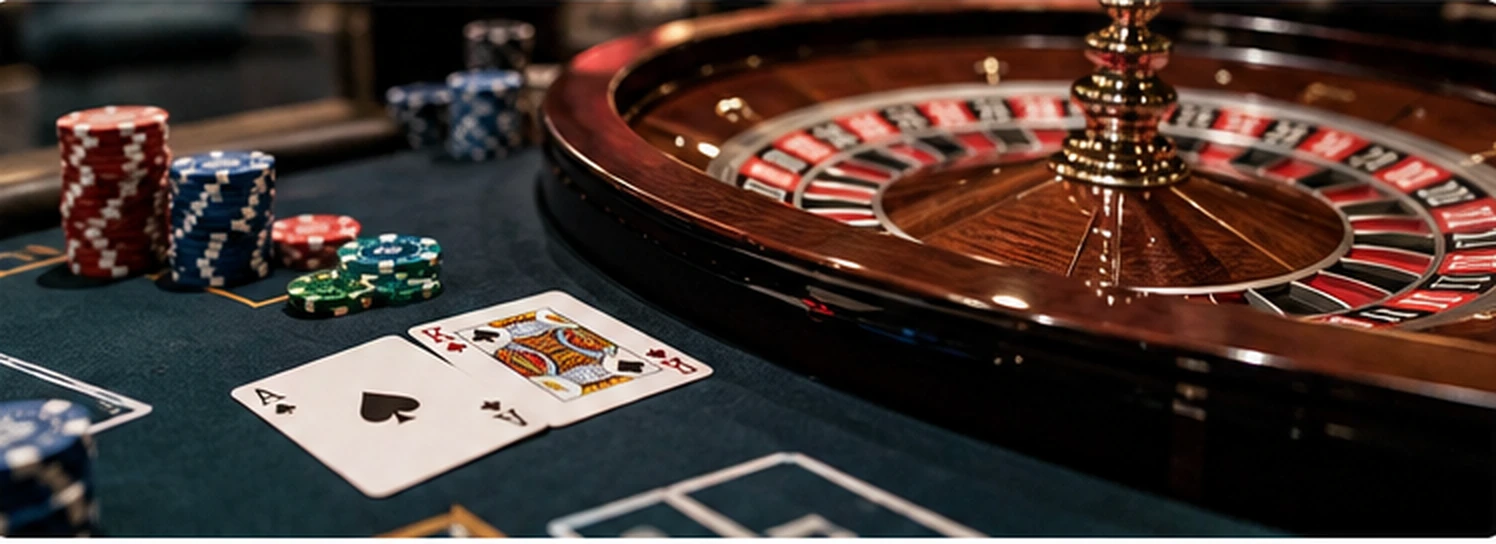
Blackjack & Roulette
- Updated October 22, 2026
- Wine Time Editorial
Blackjack hinges on decisions made against the dealer: hit, stand, split, or double down. Roulette is a wager on where a ball will land. Neither guarantees a profit. Compare the table rules, pace, and minimum bet before choosing a seat.
Watch a few rounds before buying chips. A $25 minimum puts more at stake on each round than a $10 minimum; a quieter high-limit room may still be a poor fit for a casual budget.
Blackjack vs. Roulette: Which Fits Your Night?
Swipe horizontally to see all columns →
Swipe horizontally to see all columns →
Swipe horizontally to see all columns →
Swipe horizontally to see all columns →
Swipe horizontally to see all columns →
Swipe horizontally to see all columns →
Swipe horizontally to see all columns →
Swipe horizontally to see all columns →
Swipe horizontally to see all columns →
Swipe horizontally to see all columns →
Swipe horizontally to see all columns →
Swipe horizontally to see all columns →
Swipe horizontally to see all columns →
Swipe horizontally to see all columns →
Swipe horizontally to see all columns →
Swipe horizontally to see all columns →
Swipe horizontally to see all columns →
Swipe horizontally to see all columns →
Swipe horizontally to see all columns →
Swipe horizontally to see all columns →
Swipe horizontally to see all columns →
Swipe horizontally to see all columns →
Swipe horizontally to see all columns →
Swipe horizontally to see all columns →
Swipe horizontally to see all columns →
Swipe horizontally to see all columns →
Swipe horizontally to see all columns →
Swipe horizontally to see all columns →
Swipe horizontally to see all columns →
Swipe horizontally to see all columns →
Swipe horizontally to see all columns →
Swipe horizontally to see all columns →
Swipe horizontally to see all columns →
Swipe horizontally to see all columns →
Swipe horizontally to see all columns →
| Decision | Blackjack | Roulette |
|---|---|---|
| What you do | Make card-playing decisions against the dealer | Choose numbers or groups of numbers on a betting layout |
| Learning curve | More rules and decision points | Simple core mechanic; several wager types |
| What affects the math | Table rules, payouts, number of decks, and player decisions | Wheel format and any special betting rules |
| Typical attraction | Interaction, concentration, and tactical choices | Shared anticipation and flexible betting patterns |
| Check before joining | Blackjack payout, soft-17 rule, double/split options | Single-zero or double-zero wheel and minimums |
Blackjack suits players who enjoy repeated decisions and are prepared to learn basic strategy. Roulette is easier to follow: choose your bet before the spin. For drinks and uninterrupted conversation, a lounge bar may work better than either table.
How Blackjack Works
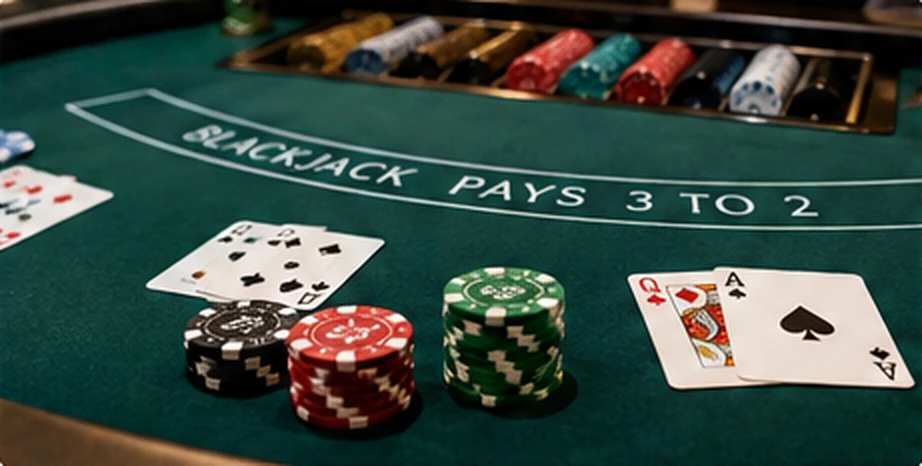
In blackjack, the objective is to finish with a hand total closer to 21 than the dealer without going over. Number cards count at face value; kings, queens, and jacks count as 10; an ace counts as 1 or 11. A two-card ace-plus-10-value hand is a natural blackjack . The dealer follows fixed house rules, while players decide how to play their hands.
Player actions and what they mean
- Hit: take another card, accepting the risk of a bust (a total above 21).
- Stand: keep the current total and let the dealer complete the round.
- Double down: increase the original wager, typically receive one additional card, then stand; exact eligibility varies.
- Split: separate eligible paired cards into two hands by placing another wager; rules for resplitting and aces vary.
- Surrender: when offered, forfeit part of the wager rather than continue the hand.
- Insurance: a separate side bet sometimes available when the dealer shows an ace; it is generally poor value for a typical player without specific information about the remaining deck.
The dealer's upcard matters because it changes which choices are favorable. Basic strategy is a rule-dependent decision chart built around your total, whether the hand is hard or soft (an ace counted as 11 without busting), and the dealer's visible card. Basic strategy reduces avoidable mistakes; it does not predict the next card or remove the house advantage. Card counting is a different technique and should not be confused with basic strategy.
Blackjack table rules that change the value
A natural blackjack paying 3:2 returns $15 in winnings on a $10 wager, while 6:5 returns $12. That $3 difference is why the posted blackjack payout deserves attention before you sit down. Also check whether the dealer must stand on soft 17 (S17) or hit soft 17 (H17), whether doubling after a split is allowed, and how many decks are in the shoe. Under favorable rules and accurate basic strategy, some blackjack games can have a house edge around 0.5%; other rule sets and suboptimal play can produce materially worse results.
A push returns the original wager when a hand ties the dealer under the applicable rules. Regular winning hands generally pay even money (1:1). A blackjack, push, and insurance payoff are three different outcomes, so don't assume all winning-looking hands are paid the same way. Optional side bets usually carry their own odds and should be evaluated separately from the main game.
How Roulette Works
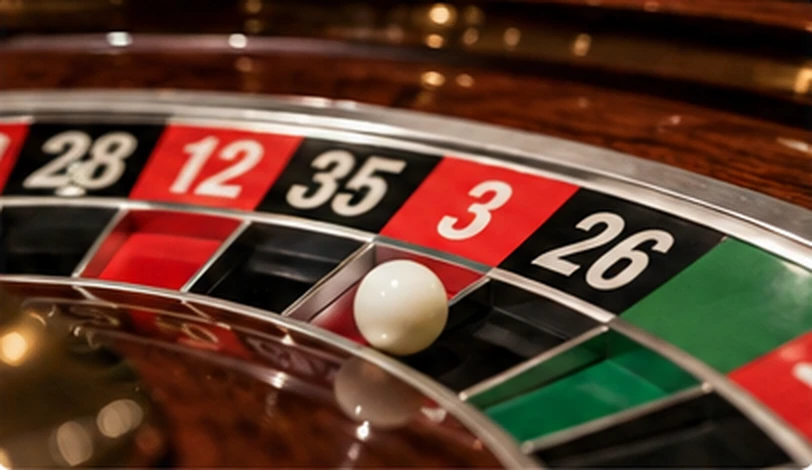
At roulette, chips go on a numbered betting layout while a croupier spins the wheel and releases the ball. The croupier takes wagers on individual numbers, neighboring numbers, or broader outcomes such as red versus black. When betting closes, the ball’s final pocket decides the result. Past spins do not alter the probabilities on a fair wheel; five reds in a row do not make black due.
American, European, and French roulette
American roulette traditionally has 38 pockets: numbers 1-36 plus 0 and 00. For standard bets, the house edge is approximately 5.26% . European roulette has 37 pockets, with a single 0; its standard house edge is approximately 2.70% . These differences follow from the additional zero, not from the croupier's technique or the number of recent wins.
French roulette commonly uses a single-zero wheel and may offer La Partage or En Prison on eligible even-money wagers. Where La Partage applies, a zero returns half the even-money stake, reducing the house edge on those wagers to approximately 1.35% . En Prison handling varies by venue; check the posted rule rather than assuming it works identically everywhere. American-, European-, and French-style games can all appear in US casinos; the geographic label does not tell you where the table is located.
Roulette bets and payouts
Swipe horizontally to see all columns →
Swipe horizontally to see all columns →
Swipe horizontally to see all columns →
Swipe horizontally to see all columns →
Swipe horizontally to see all columns →
Swipe horizontally to see all columns →
Swipe horizontally to see all columns →
Swipe horizontally to see all columns →
Swipe horizontally to see all columns →
Swipe horizontally to see all columns →
Swipe horizontally to see all columns →
Swipe horizontally to see all columns →
Swipe horizontally to see all columns →
Swipe horizontally to see all columns →
Swipe horizontally to see all columns →
Swipe horizontally to see all columns →
Swipe horizontally to see all columns →
Swipe horizontally to see all columns →
Swipe horizontally to see all columns →
Swipe horizontally to see all columns →
Swipe horizontally to see all columns →
Swipe horizontally to see all columns →
Swipe horizontally to see all columns →
Swipe horizontally to see all columns →
Swipe horizontally to see all columns →
Swipe horizontally to see all columns →
Swipe horizontally to see all columns →
Swipe horizontally to see all columns →
Swipe horizontally to see all columns →
Swipe horizontally to see all columns →
Swipe horizontally to see all columns →
Swipe horizontally to see all columns →
Swipe horizontally to see all columns →
Swipe horizontally to see all columns →
Swipe horizontally to see all columns →
| Bet | Selection | Standard payout |
|---|---|---|
| Straight up | One number | 35:1 |
| Split | Two adjacent numbers | 17:1 |
| Street | Three numbers in a row | 11:1 |
| Corner | Four touching numbers | 8:1 |
| Six line | Six numbers across two rows | 5:1 |
| Dozen or column | Twelve numbers | 2:1 |
| Red/black, odd/even, low/high | Eighteen numbers | 1:1 |
Inside bets cover individual numbers or small groups, bringing less frequent but larger payouts. Outside bets cover wider groups, producing more frequent but smaller wins. On a standard wheel, switching from straight-up bets to red/black changes the chance of a winning spin and the volatility of results; it does not eliminate the house edge. Zero and double zero are not considered red or black, odd or even, or part of a standard low/high wager.
At some roulette tables, each player gets a distinct chip color and a value assigned by the dealer. Exchange those chips before leaving; they may not be valid elsewhere. Stop placing bets when the croupier calls “no more bets.”
House Edge, RTP, and the Cost of Playing
The house edge is the mathematical average portion of wagers a casino expects to retain over a very large number of comparable bets. Return to player (RTP) expresses the complementary long-run average returned to players. Neither figure is a forecast for your next hand, spin, or evening. A 2.70% house edge does not mean you will lose exactly $2.70 on a single $100 roulette bet.
For a simple illustration, wagering $10 on 50 standard European roulette spins creates $500 in total action, even if you started the session with much less cash by reusing winnings. At a 2.70% theoretical edge, the expected loss on that action is about $13.50; actual results can vary dramatically. Fifty standard American roulette spins at the same stake produce an expected loss of approximately $26.32. These are long-run mathematical benchmarks, not predicted session losses.
Martingale doubles a stake after a loss; Fibonacci changes stakes using a number sequence. Neither method changes the wheel’s probabilities. A losing run can push either system against your bankroll or the table maximum. In blackjack, correct choices can reduce expected loss compared with uninformed play, but variance still creates losing sessions even for disciplined players.
What Makes a Casino Lounge Different?
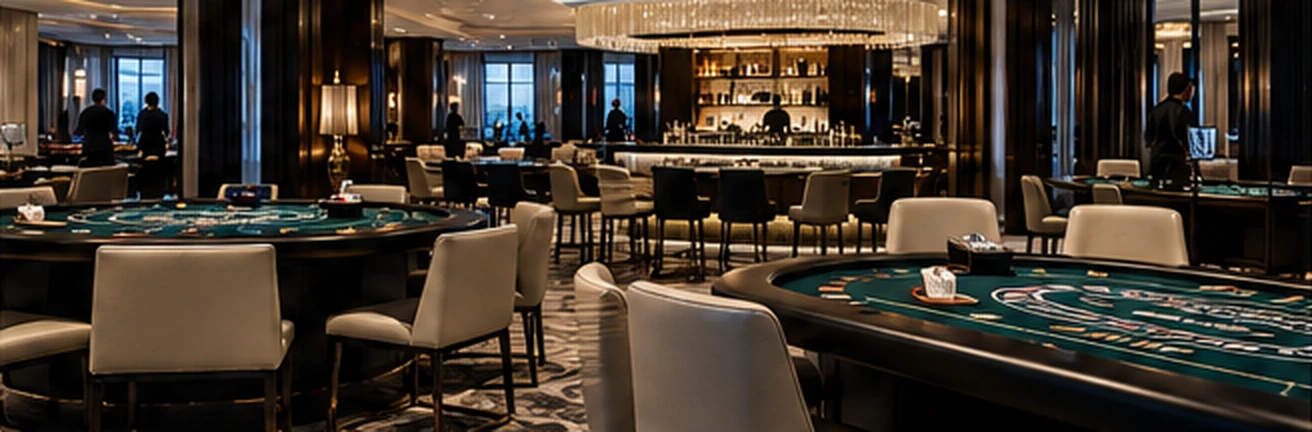
A casino lounge may put blackjack and roulette beside a cocktail bar or in a quieter room with upholstered seating, subdued lighting, and table service. Some properties keep high-limit games in a separate area. Access, minimum bets, and amenities vary, so check the room rather than relying on its name.
ARIA Resort & Casino in Las Vegas lists blackjack, roulette, cocktails, and conversation at its High Limit Lounge. Other venues may offer a different mix. Ask about casino hosts, premium seating, rewards eligibility, and access before arriving.
How to choose a lounge before arriving
- Confirm the games: ask whether blackjack and roulette tables are available in the lounge itself, elsewhere on the casino floor, or only through electronic table games.
- Check the minimum and maximum: a $10 minimum and a $100 minimum create very different budget requirements. Limits may change by day, hour, and demand.
- Ask for the actual rules: for blackjack, check 3:2 versus 6:5 and H17 versus S17; for roulette, ask about single zero, double zero, and any French rules.
- Check comfort and access: dress code, age and identification requirements, accessibility, smoking policy, noise, seating, and whether guests who are not playing may accompany you.
- Separate gaming from hospitality: confirm whether drinks, table service, dining, and VIP amenities cost extra or require status in a casino rewards program.
Roulette gives friends a single spin to follow; blackjack demands attention to individual hands. At casino-themed parties, the tables may be simulated rather than licensed for real-money wagering.
First-Time Table Etiquette
Watch a round first. Buy chips during a pause and ask the dealer about unfamiliar rules. In blackjack, place chips in the betting circle and use the house’s hand signals so the dealer can clearly see your decision. Do not touch cards in games where cards must remain on the felt. Other players may offer advice, but each bettor remains responsible for their own choices.
At roulette, set chips down before betting closes and keep your hands clear while the winning number is being marked and wagers are settled. Table layouts, chip colors, and payout procedures can differ from those at blackjack. Tipping practices also differ by property; ask the staff if you are uncertain. You do not need to play every round, but some tables have rules about maintaining a seat during busy periods.
Set a Session Budget Before You Play
Before buying chips, set a spending limit you can afford to lose and decide when you will leave. Your total wagered amount can exceed the cash you brought because winnings may be staked again. Don’t borrow to gamble or raise stakes to chase losses. Free drinks and rewards points are not reasons to extend a session. Alcohol may impair decisions, particularly in blackjack, where acting on the correct hand total requires attention.
In the United States, minimum legal gambling ages and permitted casino formats depend on the jurisdiction and property. Confirm the venue's rules and bring valid identification. If gambling stops feeling recreational, end the session; confidential support is available through the National Council on Problem Gambling .
Common Questions About Blackjack and Roulette
Do red and black bets have a 50/50 chance?
No. On a European wheel, red wins on 18 of 37 pockets; on an American wheel, 18 of 38. Green zero pockets prevent a true 50/50 outcome.
Can guests enjoy a casino lounge without gambling?
Sometimes. Some lounges have independent bar or seating service; others reserve access or seating for active players or eligible guests. Check the specific venue's policies rather than assuming a gaming lounge operates like a regular cocktail lounge.