

Casino Regulation
- Updated October 22, 2026
- Wine Time Editorial
Before depositing at a US casino, check three things: whether the operator is authorized to offer that game, whether you are in an eligible jurisdiction, and which regulator handles complaints. In the United States, the most important first check is not whether a casino advertises itself as “legal” or “licensed.” It is whether the specific operator, gambling product, and player location fall under an applicable US regulatory authorization. A land-based casino license does not automatically authorize nationwide online casino gambling, and legal sports betting does not automatically make real-money online slots legal.
Regulated gaming still involves financial risk. A license permits oversight and enforcement; it cannot guarantee winnings, refunds, or freedom from gambling-related harm.
Who regulates casinos in the United States?
There is no single federal commission that licenses every commercial casino in the country. US casino regulation combines state gambling laws, federal statutes, and tribal gaming law . The rules change with the operator, location, and activity - casino games, poker, and sports wagering may have different permissions.
Swipe horizontally to see all columns →
Swipe horizontally to see all columns →
Swipe horizontally to see all columns →
Swipe horizontally to see all columns →
Swipe horizontally to see all columns →
Swipe horizontally to see all columns →
Swipe horizontally to see all columns →
Swipe horizontally to see all columns →
Swipe horizontally to see all columns →
Swipe horizontally to see all columns →
Swipe horizontally to see all columns →
Swipe horizontally to see all columns →
Swipe horizontally to see all columns →
Swipe horizontally to see all columns →
Swipe horizontally to see all columns →
Swipe horizontally to see all columns →
Swipe horizontally to see all columns →
Swipe horizontally to see all columns →
Swipe horizontally to see all columns →
Swipe horizontally to see all columns →
Swipe horizontally to see all columns →
Swipe horizontally to see all columns →
Swipe horizontally to see all columns →
Swipe horizontally to see all columns →
Swipe horizontally to see all columns →
Swipe horizontally to see all columns →
Swipe horizontally to see all columns →
Swipe horizontally to see all columns →
Swipe horizontally to see all columns →
Swipe horizontally to see all columns →
Swipe horizontally to see all columns →
Swipe horizontally to see all columns →
Swipe horizontally to see all columns →
Swipe horizontally to see all columns →
Swipe horizontally to see all columns →
| Regulatory layer | Principal role | What players should check |
|---|---|---|
| State | Licenses and supervises commercial gaming within its jurisdiction, subject to state law. | Whether the actual casino or platform appears in the appropriate regulator's authorized records. |
| Federal | Sets applicable rules affecting unlawful internet gambling payments, interstate communications, financial crime controls, and tribal gaming. | Whether federal compliance claims are being confused with a state casino license. |
| Tribal | Tribal governments are primary regulators of Indian gaming, with NIGC oversight and, for certain games, tribal-state compacts. | The relevant tribal gaming authority and the rules applying to that gaming facility. |
For example, the Nevada Gaming Control Board and Nevada Gaming Commission administer Nevada's commercial gaming framework. The Michigan Gaming Control Board (MGCB) supervises several forms of commercial gambling in Michigan. Pennsylvania relies on the Pennsylvania Gaming Control Board (PGCB), while New Jersey's Division of Gaming Enforcement (DGE) handles significant casino regulatory and internet gaming functions alongside the Casino Control Commission. Those agencies do not issue interchangeable nationwide approvals.
What federal casino laws actually do

Unlawful Internet Gambling Enforcement Act (UIGEA)
The UIGEA restricts specified payments connected with unlawful internet gambling. It does not create a federal license for online casinos or independently make every internet wager illegal. Whether the underlying gambling activity is unlawful depends on other applicable federal and state or tribal law. A payment method being accepted is therefore not proof that an offshore casino may lawfully serve a resident of a particular state.
Interstate Wire Act
The Interstate Wire Act addresses specified interstate or foreign wire communications connected with betting or wagering. Its application has generated litigation and interpretive disputes, particularly around activities beyond sports betting. The Wire Act is not a nationwide online-casino license. For a player's immediate decision, the state's authorization of the relevant activity is the more useful verification point.
Indian Gaming Regulatory Act (IGRA)
The Indian Gaming Regulatory Act establishes the federal structure for gaming on Indian lands and the National Indian Gaming Commission (NIGC). It differentiates Class I traditional or social gaming, Class II games including qualifying bingo and certain card games, and Class III gaming, which includes many conventional casino games. Class III gaming generally requires an approved tribal ordinance and an effective tribal-state compact, among other legal conditions. Indian tribes remain primary regulators; NIGC responsibilities and state participation are not identical across the three classes.
Bank Secrecy Act and casino financial controls
Under applicable Bank Secrecy Act (BSA) rules, covered casinos and card clubs must maintain risk-based anti-money laundering (AML) compliance programs. Requirements can involve customer due diligence, transaction records, Currency Transaction Reports (CTRs), and Suspicious Activity Reports (SARs), overseen by the Financial Crimes Enforcement Network (FinCEN). These safeguards address financial crime; they do not establish that a game offers favorable odds or that a casino is licensed to serve every state. See FinCEN's casino compliance guidance.
State casino regulation: why location and gaming type matter
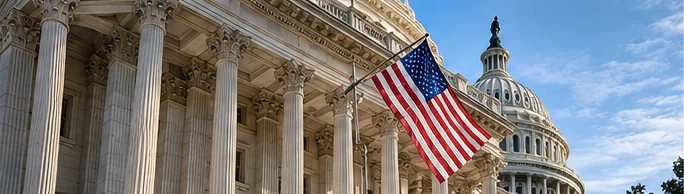
Casino licensing requirements can include ownership and suitability investigations, financial disclosures, background checks on key personnel, gaming equipment approval, internal controls, surveillance, accounting, security, tax reporting, and ongoing regulatory inspections. A regulator may impose civil penalties, suspend or revoke a gaming license, or refer suspected illegal conduct for further enforcement.
A Nevada casino license, for instance, does not permit the operator to offer online slots to players in every state. State laws separately address land-based casinos, interactive gaming or iGaming, online poker, and sportsbooks. The 2018 Supreme Court decision Murphy v. NCAA overturned the federal PASPA restriction on state-authorized sports wagering; it did not legalize internet casino games nationwide.
Swipe horizontally to see all columns →
Swipe horizontally to see all columns →
Swipe horizontally to see all columns →
Swipe horizontally to see all columns →
Swipe horizontally to see all columns →
Swipe horizontally to see all columns →
Swipe horizontally to see all columns →
Swipe horizontally to see all columns →
Swipe horizontally to see all columns →
Swipe horizontally to see all columns →
Swipe horizontally to see all columns →
Swipe horizontally to see all columns →
Swipe horizontally to see all columns →
Swipe horizontally to see all columns →
Swipe horizontally to see all columns →
Swipe horizontally to see all columns →
Swipe horizontally to see all columns →
Swipe horizontally to see all columns →
Swipe horizontally to see all columns →
Swipe horizontally to see all columns →
Swipe horizontally to see all columns →
Swipe horizontally to see all columns →
Swipe horizontally to see all columns →
Swipe horizontally to see all columns →
Swipe horizontally to see all columns →
Swipe horizontally to see all columns →
Swipe horizontally to see all columns →
Swipe horizontally to see all columns →
Swipe horizontally to see all columns →
Swipe horizontally to see all columns →
Swipe horizontally to see all columns →
Swipe horizontally to see all columns →
Swipe horizontally to see all columns →
Swipe horizontally to see all columns →
Swipe horizontally to see all columns →
| Player's situation | Regulatory question | Why it matters |
|---|---|---|
| Visiting a physical casino in Nevada | Does the venue hold the appropriate Nevada license? | State gambling oversight applies to the licensed establishment and authorized games. |
| Opening an online casino account in Michigan | Is the exact platform on MGCB's list of authorized providers? | An offshore license alone does not establish legal Michigan operation. |
| Crossing a state line while using a casino app | Is the current physical location within an authorized jurisdiction? | Geolocation requirements can prevent otherwise registered users from playing. |
| Visiting a tribal casino | What tribal regulator and gaming classification apply? | Commercial state-license directories may not cover the facility. |
Check the regulator’s current license directory; undated state-by-state lists may be obsolete.
How to verify a casino license before depositing

Match the casino’s public-facing brand and web address to a specific authorized operator. A footer badge or a certificate from a testing company is not the same as state authorization.
- Identify the activity. Separate online casino games from sports betting, online poker, sweepstakes-style products, and in-person gambling.
- Identify the relevant jurisdiction. For mobile play, use the state where you are physically located, not merely the state of your home address or the country named on the site's license.
- Open the regulator's own website. Start with a state gaming board or the appropriate tribal authority, not a link that exists only in the casino's footer.
- Match the legal operator to the brand. Compare the approved business, platform or domain, and permitted product with the service offered to you. A corporate parent having a license does not automatically authorize every associated brand.
- Check the scope and status. An expired, restricted, suspended, or unrelated authorization should not be treated as permission to accept wagers.
- Inspect the player-protection route. Find the operator's published complaint process, account-limit tools, self-exclusion information, and regulator contact details before funding an account.
Nevada publishes licensed-location records; Michigan lists authorized online platforms. Match the legal operator and platform against the regulator’s current records rather than relying on “US compliant” marketing.
Warning signs of an unlicensed or unsuitable casino
- The operator claims one foreign license permits real-money casino play throughout the United States.
- There is no verifiable US regulator, authorized provider listing, or legal operator identity for the advertised product.
- The site encourages users to bypass geolocation checks or misrepresent their location.
- Withdrawal terms, customer support, responsible gaming limits, or the complaint route cannot be identified before deposit.
- Marketing suggests regulation guarantees winnings, eliminates risk, or makes gambling a dependable income source.
Self-exclusion has a jurisdictional gap that is easy to miss. In October 2026, the MGCB warned that offshore operators may accept play from people who enrolled in Michigan's state responsible gaming exclusion system because those sites are not bound by Michigan licensing rules. The regulator also described risks involving unpaid winnings and limited recourse. See the MGCB's October 8, 2026 enforcement notice.
How casino regulation protects players - and where it stops

Age and identity verification
Licensed operators check identity and the legal gambling age under the rules of their jurisdiction. Know Your Customer (KYC) controls help distinguish an eligible account holder from a minor or fraudulent user. The minimum age and accepted ID vary by jurisdiction. Verification can involve a request for additional documents before withdrawals or account changes, so players should review the operator's published procedures.
Geolocation and account security
Regulated online casinos use location checks to confirm that a wager originates inside an authorized area. An approved player can still be unable to wager after crossing a state line; identity verification and geolocation answer different questions. Strong authentication, transaction monitoring, and protection of personal data are additional operational concerns; exact technical obligations depend on the regulator.
Game integrity, RNG testing, and payout information
Gaming equipment and online platforms may be subject to technical standards, independent laboratory testing, and oversight of random number generators (RNGs). Return to player (RTP) is a long-run mathematical expectation, not a prediction of one session’s results. Certification should be tied to the applicable product and authority, not merely an unexplained laboratory badge. Nevada, for example, publishes detailed gaming regulations covering licensing, interactive gaming, internal controls, and patron disputes.
Player funds, withdrawals, and disputes
Regulated operators face rules concerning accounting, reporting, and handling player disputes, but protections are not uniform across states or gambling products. A regulator may review a qualifying complaint, investigate conduct, or impose sanctions; it does not necessarily act as a payment guarantor. Read bonus terms, wagering requirements, withdrawal conditions, and identity-check obligations in advance. If a payment is withheld, preserve transaction receipts, screenshots, account communications, and the applicable terms.
Responsible gaming rules and safer-play tools

Responsible gaming rules can require more than a link in the website footer. Depending on jurisdiction and license type, operators may be required to publish safer gambling information, train staff, implement self-exclusion programs, restrict certain advertising, or offer financial and session controls. The American Gaming Association's Responsible Gaming Regulations and Statutes Guide catalogs state-level approaches, while its Code of Conduct describes additional industry commitments. Voluntary industry standards should not be confused with binding state law.
Swipe horizontally to see all columns →
Swipe horizontally to see all columns →
Swipe horizontally to see all columns →
Swipe horizontally to see all columns →
Swipe horizontally to see all columns →
Swipe horizontally to see all columns →
Swipe horizontally to see all columns →
Swipe horizontally to see all columns →
Swipe horizontally to see all columns →
Swipe horizontally to see all columns →
Swipe horizontally to see all columns →
Swipe horizontally to see all columns →
Swipe horizontally to see all columns →
Swipe horizontally to see all columns →
Swipe horizontally to see all columns →
Swipe horizontally to see all columns →
Swipe horizontally to see all columns →
Swipe horizontally to see all columns →
Swipe horizontally to see all columns →
Swipe horizontally to see all columns →
Swipe horizontally to see all columns →
Swipe horizontally to see all columns →
Swipe horizontally to see all columns →
Swipe horizontally to see all columns →
Swipe horizontally to see all columns →
Swipe horizontally to see all columns →
Swipe horizontally to see all columns →
Swipe horizontally to see all columns →
Swipe horizontally to see all columns →
Swipe horizontally to see all columns →
Swipe horizontally to see all columns →
Swipe horizontally to see all columns →
Swipe horizontally to see all columns →
Swipe horizontally to see all columns →
Swipe horizontally to see all columns →
| Tool | Function | Limitation to understand |
|---|---|---|
| Deposit limit | Restricts money added to a gambling account over a defined period. | Does not always cap total losses across multiple operators. |
| Loss or wagering limit | Can restrict spending or stakes under the operator's rules. | Definitions and reset periods differ by platform. |
| Session limit or reality check | Interrupts or highlights time spent gambling. | A reminder does not necessarily end a gambling session. |
| Cool-off or time-out | Temporarily restricts account access. | May apply only to one operator or product. |
| Self-exclusion | Blocks eligible gambling access for a specified period or other applicable term. | Scope, duration, reinstatement, and coverage vary by program. |
Michigan has separate exclusion systems for different gambling products. Its Disassociated Persons List (DPL) applies to the three Detroit commercial casinos, while its Responsible Gaming Database (RGD) covers Michigan-regulated online gaming and internet sports betting. These are distinct programs, not one nationwide ban. Someone seeking to stop gambling should verify exactly which operators and products are covered and consider additional device-blocking tools such as Gamban where available.
The National Council on Problem Gambling (NCPG) provides gambling-related support resources. When stopping play is difficult, counseling and formal self-exclusion may be more useful than budget reminders.
What to do when a regulated casino breaks the rules
For a disputed game result, withheld withdrawal, or failed self-exclusion restriction, preserve evidence and identify the regulator responsible for that operator.
- Stop further play while the issue is unresolved. Avoid depositing additional funds to “unlock” a withdrawal or recover a loss.
- Document the transaction. Save account IDs, timestamps, game records, terms, support responses, and relevant payment details. Avoid publicly posting personal identification.
- Submit the operator's formal complaint. Request a reference number and written explanation of the decision.
- Escalate to the competent regulator. Use its patron dispute, consumer complaint, or illegal gambling reporting process. In Nevada, for example, gaming regulations include procedures addressing patron disputes.
- Report suspected fraud separately. A state gambling regulator may not have jurisdiction over an offshore website; a bank or payment provider and appropriate law enforcement or consumer protection agencies may have separate roles.
If a site is unauthorized, a state agency may investigate or take enforcement action against the operator without being able to recover the player's money. That gap in enforcement can leave players with few practical recovery options.
Frequently asked questions about casino regulation
Are all US casinos regulated by the federal government?
No. Commercial casinos are generally regulated under state frameworks; tribal gaming operates under tribal law and the federal IGRA structure, with varying state roles for Class III gaming. Federal financial and other laws can apply across these categories without replacing the relevant gaming regulator.
Does a casino license guarantee fair results or payouts?
No license guarantees winnings. Applicable testing, controls, audits, and complaint procedures may reduce certain integrity risks, but casino games retain a house edge or other financial risk. A license also does not guarantee reimbursement if an operator fails.
Can I use my casino account while traveling?
Not necessarily. An account created in a legal market can still be blocked from real-money play after you cross into a different jurisdiction. The service must be authorized for the specific activity and current location; geolocation is a separate requirement from identity verification.
Does an offshore license cover US players?
Not by itself. A foreign license does not substitute for whatever authorization a US state requires to accept that state's residents for the relevant gambling activity. Check the state regulator's current licensed-operator records.
Can self-exclusion from one casino stop all gambling?
Usually not automatically. An operator-only exclusion, a statewide online database, and an in-person casino exclusion may cover different businesses. Confirm participating operators, applicable games, duration, and reinstatement conditions directly with the program administrator.
Who handles complaints against an online casino?
For a state-authorized platform, document the operator’s response and use the state regulator’s complaint procedure. With an offshore or unlicensed site, that route may not be available.